

Medically reviewed by Dr. Jaramillo, a doctor at Goodweigh. Last updated on 8 October 2026
Short answer from Dr. Jaramillo
Adults with a BMI of 30 or above are eligible for GLP-1 medication to treat obesity. From a BMI of 27, you may be eligible if you have a weight-related condition, such as high blood pressure or prediabetes. A Goodweigh doctor will carefully assess whether the treatment is suitable and safe for you during your online medical consultation. Not everyone can use these medicines safely.
Dr. Jaramillo, doctor at Goodweigh
Want to find out more? Start your intake here
GLP-1 medication and related anti-obesity drugs can be effective in supporting weight loss, but they are not suitable for everyone. Not every drug is authorised for weight management. Below, you can read about the restrictions set out in the patient information leaflets and the drugs that are available. You can also read about reimbursement and when a doctor may not be able to treat you.
What is GLP-1 medication?
GLP-1 medication mimics a hormone produced naturally by your body that suppresses your appetite. As a result, your stomach empties more slowly and you feel full more quickly.
These medicines are primarily intended for two conditions: type 2 diabetes and the treatment of obesity. For weight loss, you should always use these medicines alongside a low-calorie diet and increased physical activity. They are intended as medical support and are not a substitute for a healthy lifestyle.
What BMI do you need to be eligible for GLP-1 medication?
According to the official patient information leaflets, this applies to adults with obesity, i.e. a BMI of 30 or above. If your BMI is lower than this but still 27 or above, you must also have at least one weight-related condition.
Examples of such conditions include prediabetes, type 2 diabetes, high blood pressure, high cholesterol, obstructive sleep apnoea or cardiovascular disease. You can work out your BMI using the BMI calculator.
Large clinical trials, such as the STEP 1 trial for semaglutide and the SURMOUNT-1 trial for tirzepatide, investigated these BMI thresholds in adults without diabetes.
Which medicines does this apply to?
Wegovy, Mounjaro and Saxenda are authorised for weight management in adults with a BMI of 30 or above. From a BMI of 27, this applies to those with a weight-related condition. Ozempic and Rybelsus are only authorised for type 2 diabetes.
You can find all weight-loss treatments on the page listing all weight-loss medicines. There is little experience with Saxenda in people aged 75 and over, and its use is therefore not recommended in this age group.
Are there any GLP-1 pills or tablets for weight loss?
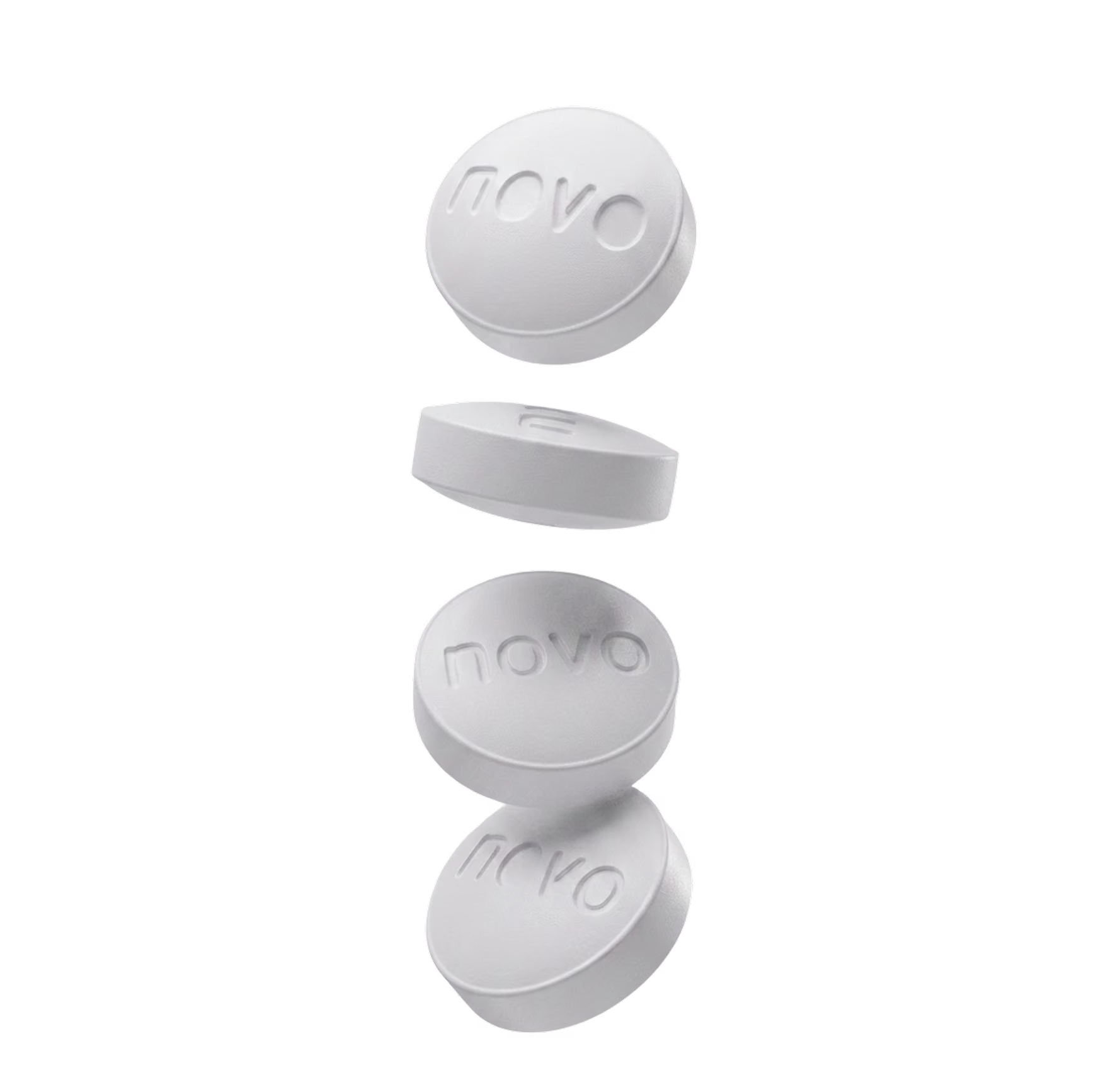
The Wegovy pill is a daily tablet which the European Medicines Agency (EMA) describes as an alternative to the injection.
You can find out more about the Wegovy pill on the product page. Further information is available in our articles on the GLP-1 pill in the Netherlands and the Wegovy pill and oral semaglutide.
Rybelsus is a tablet containing semaglutide, but it is only authorised for type 2 diabetes. It is therefore not a weight-loss pill. The injections Wegovy, Mounjaro and Saxenda are currently the main medical options for weight management.
Who is not eligible for GLP-1 medication?
You must not use these medicines if you are hypersensitive to the active ingredient or any of the excipients. Furthermore, our doctors at Goodweigh do not provide treatment in certain situations because the risk is too high.
This concerns inflammation of the pancreas (pancreatitis), whether current or past, and pregnancy or breastfeeding. If you are planning to become pregnant, you must stop taking the medicine. With Wegovy, this must be done at least two months in advance. For Mounjaro, this must be at least one month in advance. With Saxenda, you must stop as soon as you wish to become pregnant. Our doctors also do not treat patients with type 1 diabetes. The same applies if you are taking insulin or sulphonylureas, which are medicines for diabetes. Furthermore, our doctors do not treat patients with a rare form of thyroid cancer (medullary thyroid carcinoma), whether you have it yourself or it runs in your family. The same applies to the associated hereditary condition (MEN2, a disorder affecting multiple endocrine glands). Furthermore, our doctors only treat adults up to the age of 75.
If you have other medical conditions, such as a history of gallbladder problems, severe kidney or liver problems, severe inflammatory bowel disease (IBD) or certain heart problems, your doctor will monitor you particularly closely. During your intake, always mention any other medicines you are taking, such as a blood thinner (warfarin) or the heart medicine digoxin. If you are unsure whether any of these apply to you, please call your GP or pharmacy.
How does Goodweigh assess whether you are eligible for GLP-1 medication?
The initial assessment is free and takes place entirely online. A doctor will review your medical history and your BMI, which must be at least 27.0. The doctor will also check that you meet the criteria set out in the patient information leaflet.
You verify your identity by scanning your ID or using iDIN, and provide the necessary health details. Your details are assessed and the pharmacy checks whether your medicines interact with one another before the prescription is dispensed with your informed consent.
During the treatment, the doctor will gradually increase your dose over a period of about four to five months. You’ll have regular check-ups, and a lifestyle coach will support you throughout. If you’d like to find out whether you’re eligible, please start the intake process.
Is GLP-1 medication covered by the health insurance?
Saxenda is reimbursed under the basic health insurance package for weight loss, subject to certain conditions. According to the Dutch Healthcare Institute, this has applied since April 2022 to adults without type 2 diabetes who face an extremely high health risk due to their weight.
This applies to a BMI of 40 or above, or 35 or above if you have cardiovascular disease, sleep apnoea or osteoarthritis. You must also not be eligible for stomach surgery. You must also have followed a recognised lifestyle programme (GLI) for at least one year without sufficient results. You can read more about Ozempic in our article ‘Is Ozempic covered by health insurance?’. To find out whether another medication is covered, please check with your health insurer.
Quellen
Drucker, D. J. (2024). Efficacy and safety of GLP-1 medicines for type 2 diabetes and obesity. Diabetes Care, 47(11). https://pubmed.ncbi.nlm.nih.gov/38843460/
- Wilding, J. P. H., Batterham, R. L., Calanna, S., et al. (2021). Once-weekly semaglutide in adults with overweight or obesity. The New England Journal of Medicine, 384(11). https://pubmed.ncbi.nlm.nih.gov/33567185/
- Jastreboff, A. M., Aronne, L. J., Ahmad, N. N., et al. (2022). Tirzepatide once weekly for the treatment of obesity. The New England Journal of Medicine, 387(3). https://pubmed.ncbi.nlm.nih.gov/35658024/
- European Medicines Agency. First oral GLP-1 treatment for weight management. https://www.ema.europa.eu/en/news/first-oral-glp-1-treatment-weight-management
- Zorginstituut Nederland. GVS-advies liraglutide (Saxenda). https://www.zorginstituutnederland.nl/publicaties/adviezen/2022/02/24/gvs-advies-liraglutide-saxenda
Häufig gestellte Fragen
If you are an adult with a BMI of 30 or above. From a BMI of 27, you may be eligible if you have a weight-related condition, such as high blood pressure or prediabetes. A doctor will then assess whether the treatment is safe and suitable for you.
The Wegovy tablet is a daily tablet; you can find more information on the Wegovy tablet product page. Rybelsus is a tablet, but it is only for type 2 diabetes.
Yes, Wegovy, Mounjaro and Saxenda are authorised for weight loss, with or without type 2 diabetes. You do, however, need to meet the BMI criteria. Ozempic and Rybelsus are only for type 2 diabetes.
Via an online assessment with Goodweigh. A doctor will review your details and your identity will be verified using an ID scan or iDIN. If approved, you will receive a prescription.
No, our doctors do not treat type 1 diabetes. If you are using insulin or sulphonylureas, our doctors will not treat you either.
Your Final Weight Loss Program
Transform your life with our personalized telehealth weight loss program designed for lasting success.